BFR TRAINING IN NEUROLOGICAL REHABILITATION: WHAT THE RESEARCH SHOWS
Blood Flow Restriction Training in Neurological Rehabilitation: What the Research Shows
For physiotherapists, rehab clinicians, and anyone working with neurological patient populations
Traditional strength training relies on heavy loads to build muscle and function — but for patients recovering from stroke, spinal cord injury, or living with multiple sclerosis, heavy loading is often unsafe, painful, or simply impossible. This has long been a gap in neurological rehabilitation: how do you build meaningful strength in patients who can't tolerate the training intensity that normally produces results?
A growing body of research suggests blood flow restriction (BFR) training may be part of the answer. Below, we look at three recent randomized controlled trials — spanning stroke, multiple sclerosis, and spinal cord injury — that point to the same conclusion: low-load BFR training can produce real, measurable functional gains in neurological populations who often can't access conventional resistance training.
What Is BFR Training, Briefly
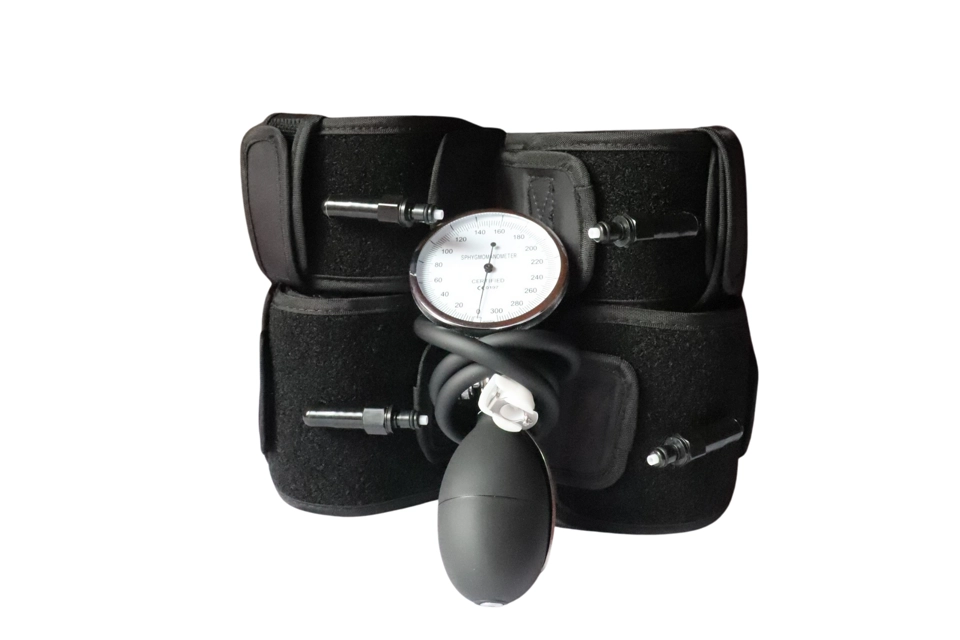
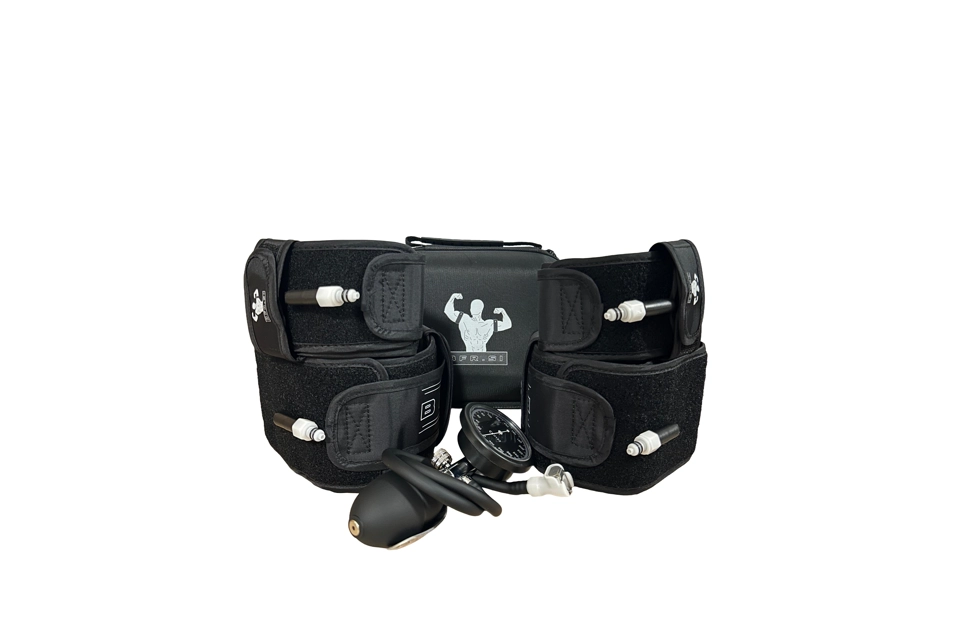
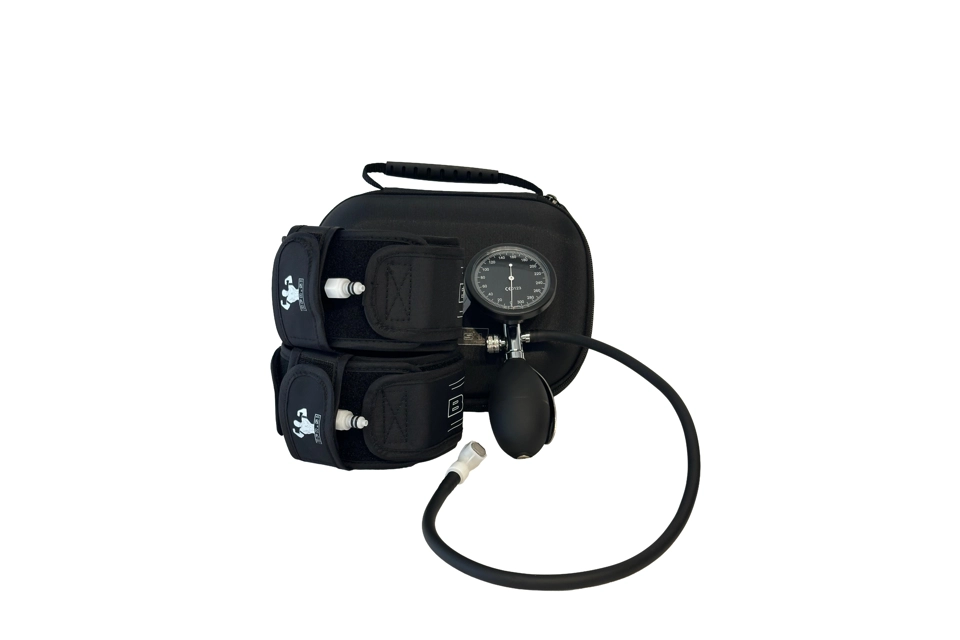
BFR training uses a pneumatic cuff to partially restrict blood flow to a working limb while the patient exercises at low loads — typically 20-40% of their one-rep max, compared to the 65-80% typically needed for strength gains with conventional training. This creates a metabolically stressed, low-oxygen environment in the muscle that appears to drive strength and hypertrophy adaptations without requiring heavy mechanical loading. For neurological patients — many of whom have limited voluntary strength, joint fragility, or reduced exercise tolerance — this offers a way to train effectively at loads that are actually achievable.
Stroke: Greater Gains When BFR Is Added to Routine Rehab
An 80-patient randomized controlled trial (published in Trials, 2026) followed first-ever stroke patients with hemiplegia over 8 weeks, comparing routine rehabilitation alone against routine rehabilitation plus BFR training. Both groups improved, but the BFR group showed significantly greater gains across every outcome measured — lower-limb motor function, balance, walking capacity, and functional independence. The researchers point to a dual mechanism: peripheral metabolic stress that drives muscle adaptation at low loads, combined with neural effects on motor unit recruitment that may be especially relevant while the nervous system itself is recovering.
Multiple Sclerosis: A "Clean Sweep" Across Strength, Fatigue, and Function
A 65-patient RCT in the Journal of Science and Medicine in Sport (2025) studied adults aged 40-65 with MS, randomizing them to 12 weeks of supervised low-load BFR resistance training (30% 1RM, twice weekly) or usual care. The BFR group showed significantly greater improvement than usual care across every outcome measured: disease impact, muscle strength, fatigue, physical activity levels, and manual dexterity. Notably, fatigue — often the most disabling symptom of MS and a major barrier to exercise adherence — improved alongside strength, suggesting BFR training doesn't come at the cost of exacerbating the fatigue patients already struggle with.
Spinal Cord Injury: Isolating the True Effect of Occlusion
A sham-controlled RCT (Jønsson et al., Scandinavian Journal of Medicine & Science in Sports, 2024) took the evidence a step further. Twenty-one adults with chronic SCI were randomized to either genuine low-load BFR leg training or an identical sham protocol using non-inflated cuffs — isolating whether the occlusion itself, not just the exercise, drives the benefit. The true BFR group showed greater gains in quadriceps and hamstring strength, quadriceps muscle thickness, and physical function than the sham group. This is one of the few neuro-BFR trials with a genuine sham arm, and it strengthens confidence that the blood flow restriction component is doing real physiological work — not just the movement itself.
Why This Matters for Your Practice
Across three very different neurological populations, the pattern holds: low-load BFR training, added to standard rehabilitation, produces measurably better outcomes than standard rehab alone — in strength, function, fatigue, and independence. For patients who can't tolerate high-intensity training, that's a meaningful clinical tool, not just a performance-enhancement trend borrowed from sports.
That said, BFR is an adjunct, not a replacement for good clinical judgment. Proper patient screening (deep vein thrombosis history, uncontrolled hypertension, peripheral arterial disease, and — in SCI specifically — autonomic dysreflexia risk) and supervision by a trained clinician remain essential before starting BFR with any patient.
Equipment That Matches the Evidence
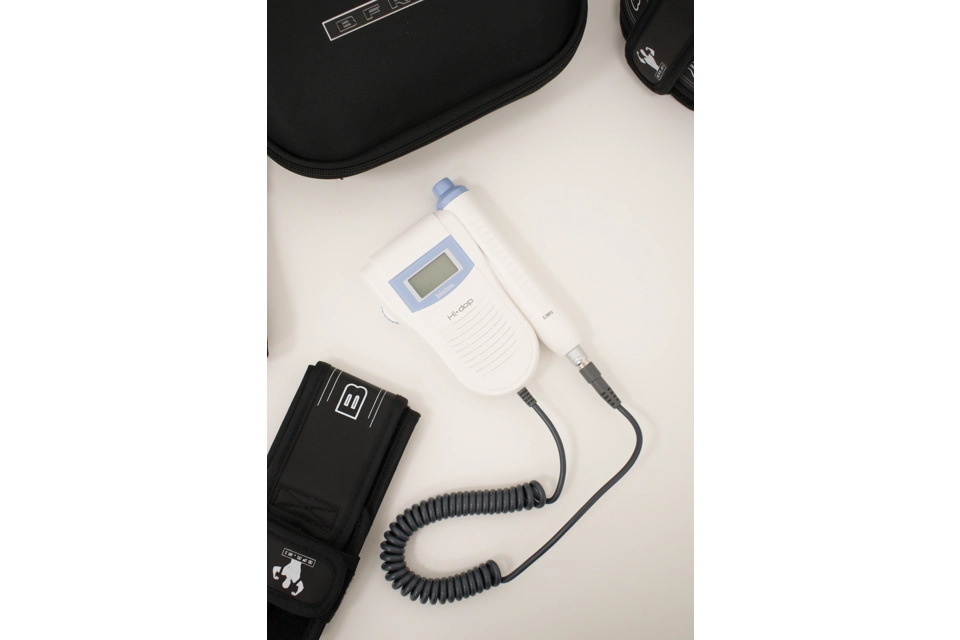
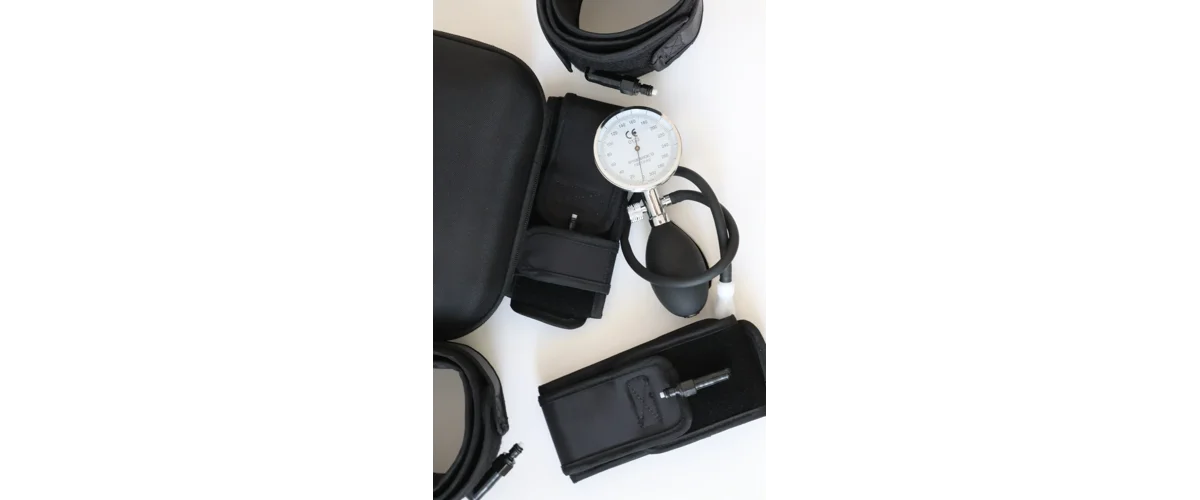
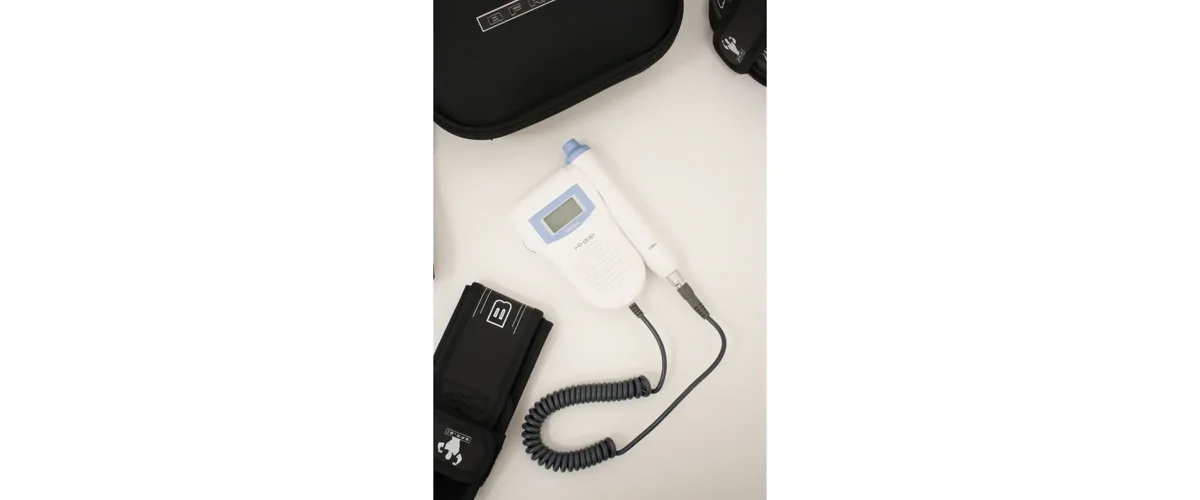
The research above relies on consistent, individualized cuff pressure — not a rough approximation. That's exactly what BFR.SI's pneumatic cuffs are built for: precise, adjustable pressure control designed for clinical use, not just gym training. If you're considering incorporating BFR into your practice with neurological patients, explore our BFR cuff sets built for the accuracy this kind of work demands.
Sources
- "A study on the effect of blood flow restriction training on the recovery of lower limb motor function in stroke patients with hemiplegia: a randomized controlled trial." Trials, Springer Nature, 2026.
- "Blood flow restriction training improves strength, fatigue, and function in middle-aged adults with multiple sclerosis: A randomized controlled trial." Journal of Science and Medicine in Sport, 2025. DOI: 10.1016/j.jsams.2025.10.007
- Jønsson AB, Krogh S, Lillelund S, Aagaard P, Kasch H, Nielsen JF. "Efficacy of Blood Flow Restriction Exercise for Improving Lower Limb Muscle Strength and Function in Chronic Spinal Cord Injury: A Randomized Controlled Trial." Scandinavian Journal of Medicine & Science in Sports, 2024;34(12):e14759. DOI: 10.1111/sms.14759
This article is for educational purposes and does not constitute medical advice. Always consult a qualified clinician before beginning BFR training with any patient.