Blood Flow Restriction Training for Knee Osteoarthritis
Blood Flow Restriction Training for Knee Osteoarthritis: What Three Randomized Trials Show
Knee osteoarthritis (OA) puts people in a bind. Strength training is a first-line treatment, but the heavy loads that build muscle can aggravate painful joints. Blood flow restriction (BFR) training is a possible way out: light weights, plus a cuff that partially restricts blood flow to the working muscles.
Three randomized controlled trials (RCTs), published between 2023 and 2025, tested BFR in people with knee OA. Here is what each found, and what it means for you.
What is blood flow restriction training?
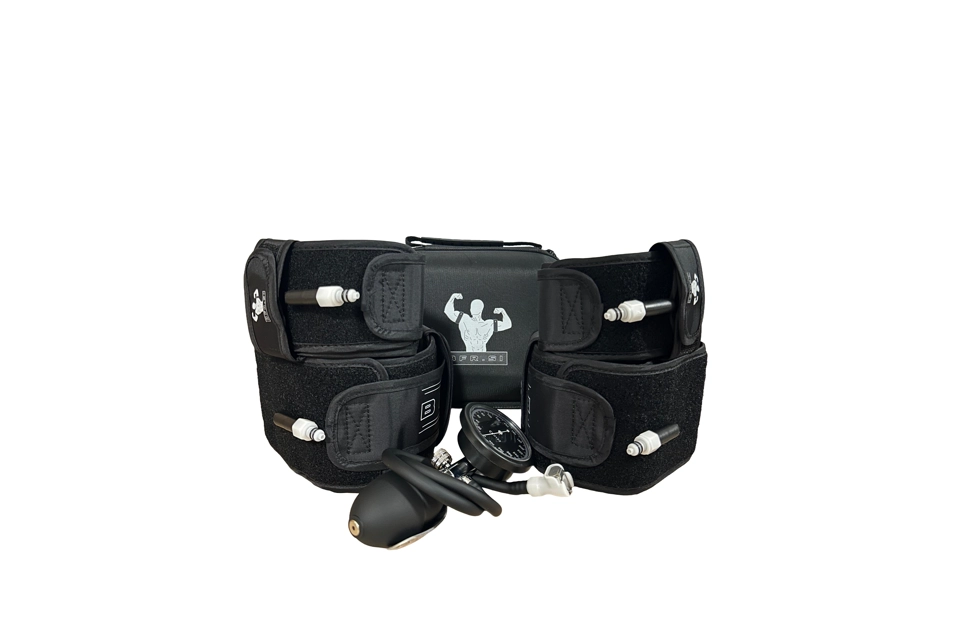
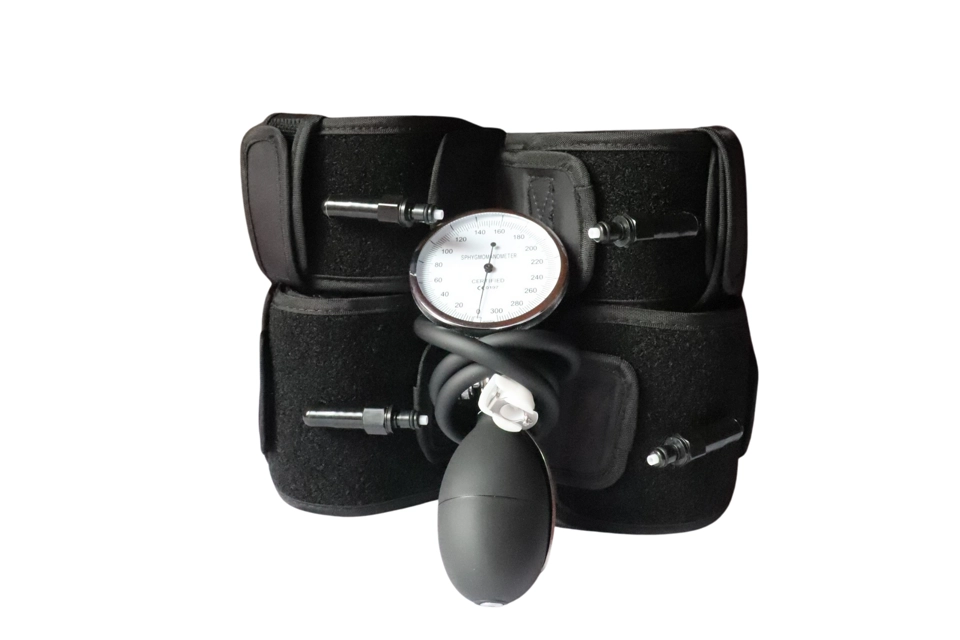
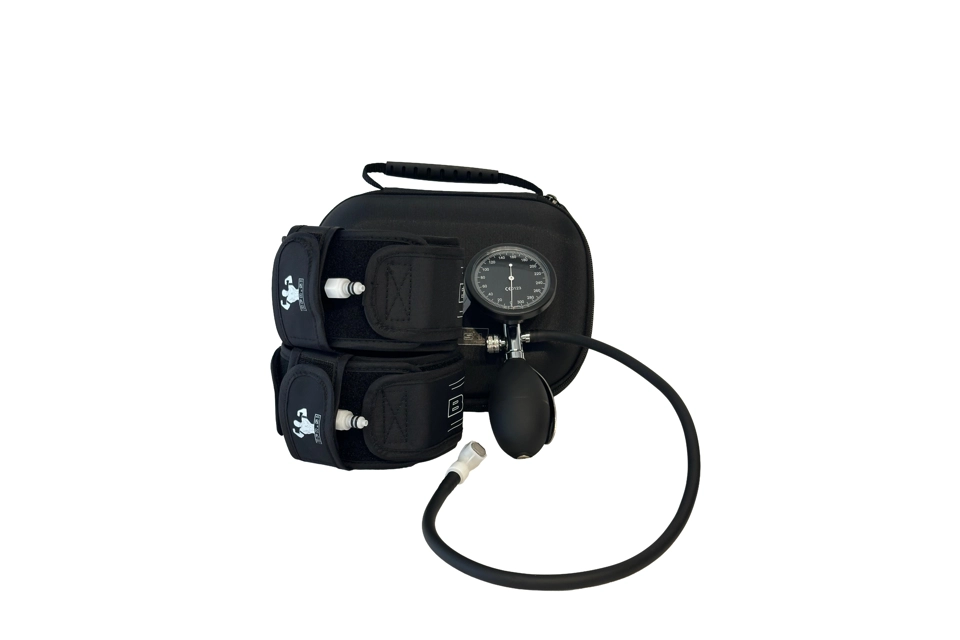
BFR training uses a pressurized cuff or band placed on the upper thigh during exercise. It limits venous outflow and, at the pressures used in these trials, partially restricts arterial inflow. The aim is to create the metabolic stress of heavy training while using much lighter loads, so the knee joint takes less mechanical strain.
Study 1: BFR added to standard exercise improved pain and function (Ghent, 2025)
Published in Annals of the Rheumatic Diseases, the VOFIKO trial enrolled 120 patients with knee OA at Ghent University Hospital. They were randomized to traditional low-intensity exercise (n=60) or the same program with BFR added (n=60), over 24 sessions in 12 weeks.
The BFR-enhanced program showed persistent improvements in pain, symptoms, quality of life, and functional measures compared with conventional exercise alone, and the benefits lasted through follow-up. The authors concluded that BFR can supply the metabolic stimulus needed for strength and function gains at lower mechanical loads.
Study 2: BFR vs. neuromuscular exercise (Copenhagen, 2025)
A Copenhagen RCT of 96 adults with chronic knee OA compared BFR resistance exercise (leg press and knee extension at about 30% of 1RM, cuff pressure progressing from 60% to 80% of arterial occlusion) with NEMEX, the standard neuromuscular program, twice weekly for 12 weeks.
BFR outperformed NEMEX on every muscle-function measure:
- Knee extensor strength: +22.7% with BFR vs. +5.6% with NEMEX
- Muscle size: +20.3% vs. +5.8%
- Leg power: +28.5% vs. +10.0%
BFR also improved rate of force development, which NEMEX did not. No exercise-related adverse events occurred in either group. One caveat: training loads weren’t matched between groups.
Study 3: BFR vs. weight-bearing training when fatty liver disease is also present (China, 2023)
Knee OA often comes with metabolic conditions. A multicenter RCT in Frontiers in Endocrinology enrolled 120 outpatients aged 50+ who had knee OA and MASLD (fatty liver disease), comparing BFR training against traditional weight-bearing training for 12 weeks. Range of motion and strength improved in both groups, but BFR produced larger gains in strength and function by week 12.
What the three studies have in common
| Question | Ghent | Copenhagen | China (MASLD) |
|---|---|---|---|
| Participants | 120 | 96 | 120 |
| Comparison | Exercise + BFR vs. exercise | BFR vs. NEMEX | BFR vs. weight-bearing |
| Duration | 12 weeks | 12 weeks | 12 weeks |
| Direction of result | Favored BFR | Favored BFR | Favored BFR |
The takeaway: across three different comparisons, adding or substituting BFR gave equal or better results than conventional rehab, at lower joint loads.
Limits to keep in mind: none of the trials were fully blinded for participants (hard to do with a cuff), loads differed between arms in some cases, and these are relatively short programs. BFR is promising, not a cure.
Is BFR safe for knee OA?
No exercise-related adverse events were reported in the Copenhagen trial. Still, BFR isn’t for everyone. The Ghent trial excluded patients with conditions such as severe hypertension, and BFR is generally not advised for people with a history of blood clots, certain cardiovascular conditions, or pregnancy. Check with your physician or physiotherapist before starting.
How to start BFR training for knee pain
- Get cleared by a healthcare professional.
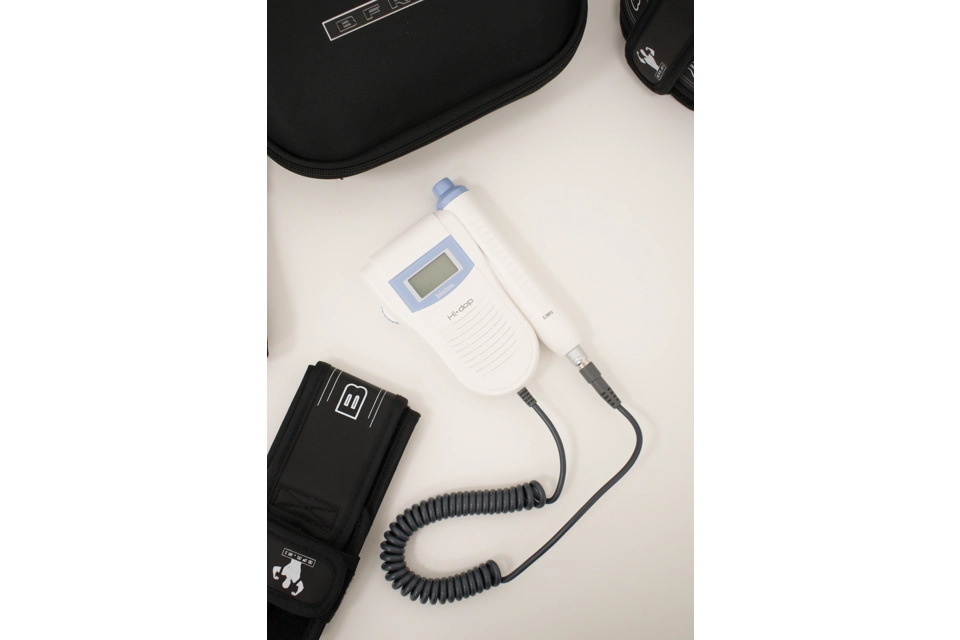
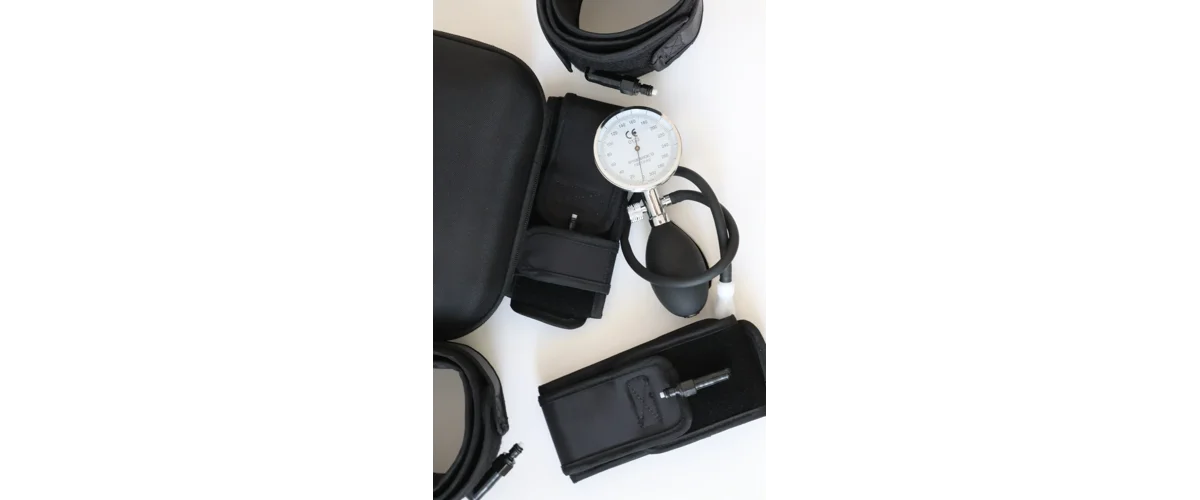
- Use a proper BFR cuff, not a knee wrap or tourniquet. Pressure matters, and so does cuff width and fit.
- Start light. The trials used loads of roughly 30% of 1RM, which is far below traditional strength training.
- Progress gradually in pressure and volume, as the trials did over 12 weeks.
- Train consistently, twice weekly in the Copenhagen protocol.
Shop BFR cuffs at BFR.SI
If you’re ready to try BFR training, BFR.SI offers cuffs built for rehabilitation and performance. Not sure which fits you? Reach out, we will be happy to assist you.
Educational content only, not medical advice. Consult your healthcare provider before starting any new exercise program.
FAQ
Does BFR training help knee osteoarthritis?
In three recent RCTs, BFR training matched or outperformed conventional exercise for strength, function, and (in the Ghent trial) pain.
How often should you do BFR training for knee OA?
The trials used twice-weekly sessions over 12 weeks.
Can BFR replace heavy weight training for knee pain?
For people who can’t tolerate heavy loads, BFR offers a low-load alternative. The Copenhagen trial found greater strength and size gains with BFR than with standard neuromuscular exercise.
Are BFR cuffs safe?
When used properly and after medical clearance, adverse events were not reported in the Copenhagen trial. People with certain vascular or cardiovascular conditions should avoid BFR.
References
- Jacobs E, Stroobant L, Victor J, et al. Vascular occlusion for optimising the functional improvement in patients with knee osteoarthritis: a randomised controlled trial. Ann Rheum Dis. 2025;84(2):341–350. doi:10.1136/ard-2024-226579
- Sørensen B, Magnusson SP, Svensson RB, et al. Effects of blood-flow restricted resistance exercise versus neuromuscular exercise on mechanical muscle function in adults with chronic knee osteoarthritis. Scand J Med Sci Sports. 2025;35(5):e70069. doi:10.1111/sms.70069
- Hu C, Zhu B, Wang Y, et al. Effectiveness of blood flow restriction versus traditional weight-bearing training in rehabilitation of knee osteoarthritis patients with MASLD: a multicenter randomized controlled trial. Front Endocrinol. 2023;14:1220758. doi:10.3389/fendo.2023.1220758